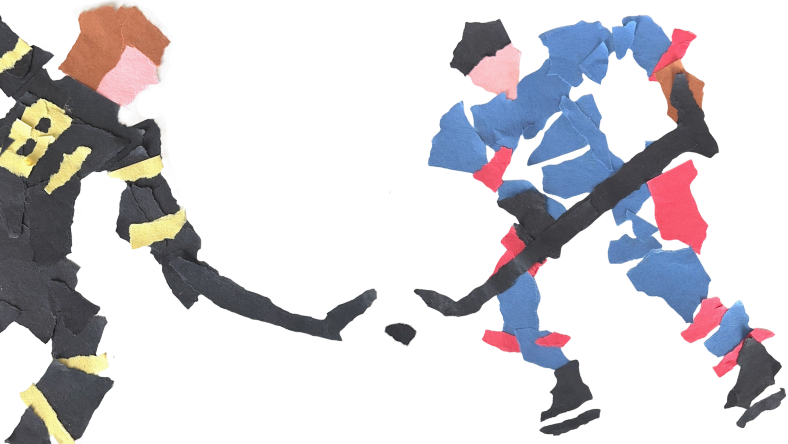
The sports media has long been obsessed with toughness. From locker room bravado to hypermasculine expectations, athletes are often portrayed as people who must sacrifice vulnerability to succeed. That is exactly why “Heated Rivalry” stands out as more than just a gay hockey show. At its core, it is a cultural conversation about identity, acceptance and the emotional reality many athletes face but rarely feel safe enough to express.
For decades, professional and amateur sports have operated under an unspoken rule: Sexuality, especially if it challenges traditional norms, should stay off the ice, field or court. Athletes are expected to perform strength, confidence and dominance, while anything that suggests vulnerability can be treated as weakness. “Heated Rivalry” disrupts that narrative by presenting athletes as complex individuals who experience pressure not only to win games but also to hide parts of themselves.
One of the most emotionally compelling ways the show explores this idea is through the relationship between Ilya Rozanov and Shane Hollander. Their connection exists in a constant state of tension between love and secrecy. On the ice, they are fierce competitors driven by national pride and professional expectations. Off the ice, their relationship reveals a level of emotional vulnerability neither of them feels safe expressing publicly. Their romance is not portrayed as effortless or glamorous. Instead, it highlights the emotional cost of maintaining a relationship in a culture that often discourages authenticity, especially within male-dominated sports.
Ilya’s personal journey becomes even more complex following the passing of his father. His father’s death forces Ilya to confront unresolved emotions and expectations that shaped both his athletic career and his sense of identity. Rather than being allowed time to openly process grief, Ilya feels pressure to continue performing at an elite level, reflecting a broader reality within professional sports where personal struggles are often pushed aside for competition. His grief intensifies his emotional isolation, making his relationship with Shane feel like one of the only places where he can exist without performance or expectation. By allowing viewers to witness how deeply loss impacts Ilya, the show reinforces the idea that athletes carry emotional burdens that are rarely acknowledged publicly.
Shane’s storyline introduces another powerful layer through his persistent fear of being exposed. Throughout the show, Shane constantly wrestles with anxiety surrounding what being outed could mean for his career, reputation and relationships with teammates. His fear is not portrayed as irrational but rather as a reflection of the very real risks many queer athletes still face. Shane carefully monitors his behavior, public interactions and emotional expression, showing how secrecy becomes a form of survival. His internal conflict highlights the exhausting reality of living between personal truth and professional security.
The emotional push and pull between Ilya and Shane ultimately demonstrates how deeply sports culture can shape personal relationships. Their connection is filled with longing, miscommunication and emotional distance, not because of a lack of love, but because of the environment surrounding them. Their relationship shows that vulnerability in sports is often treated as a liability rather than a strength, making their love story feel both deeply personal and culturally significant.
The importance of representation in sports cannot be overstated. Young athletes, particularly those questioning or exploring their sexuality, often grow up without seeing themselves reflected in the teams or leagues they admire. When queer athletes are missing from sports storytelling, it silently reinforces the idea that they do not belong there. “Heated Rivalry” pushes against that silence. By showing characters navigating relationships, competition and self-acceptance simultaneously, the show gives viewers something sports media has historically avoided: honesty.
Beyond representation, the show also confronts the harmful myth that athletic success and emotional openness cannot coexist. Many athletes struggle with mental health, identity pressure and fear of rejection. By humanizing these experiences, “Heated Rivalry” offers validation to viewers who may feel isolated in similar struggles. It encourages the idea that strength includes authenticity, not the absence of it.
Ultimately, “Heated Rivalry” is not just about romance or rivalry. It is about visibility. It is about breaking down stereotypes that have dominated sports culture for generations. Most importantly, it is about giving athletes, both fictional and real, permission to exist fully as themselves.