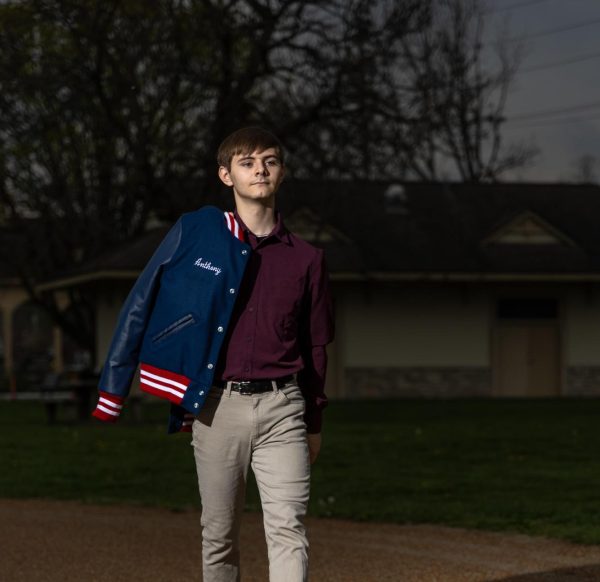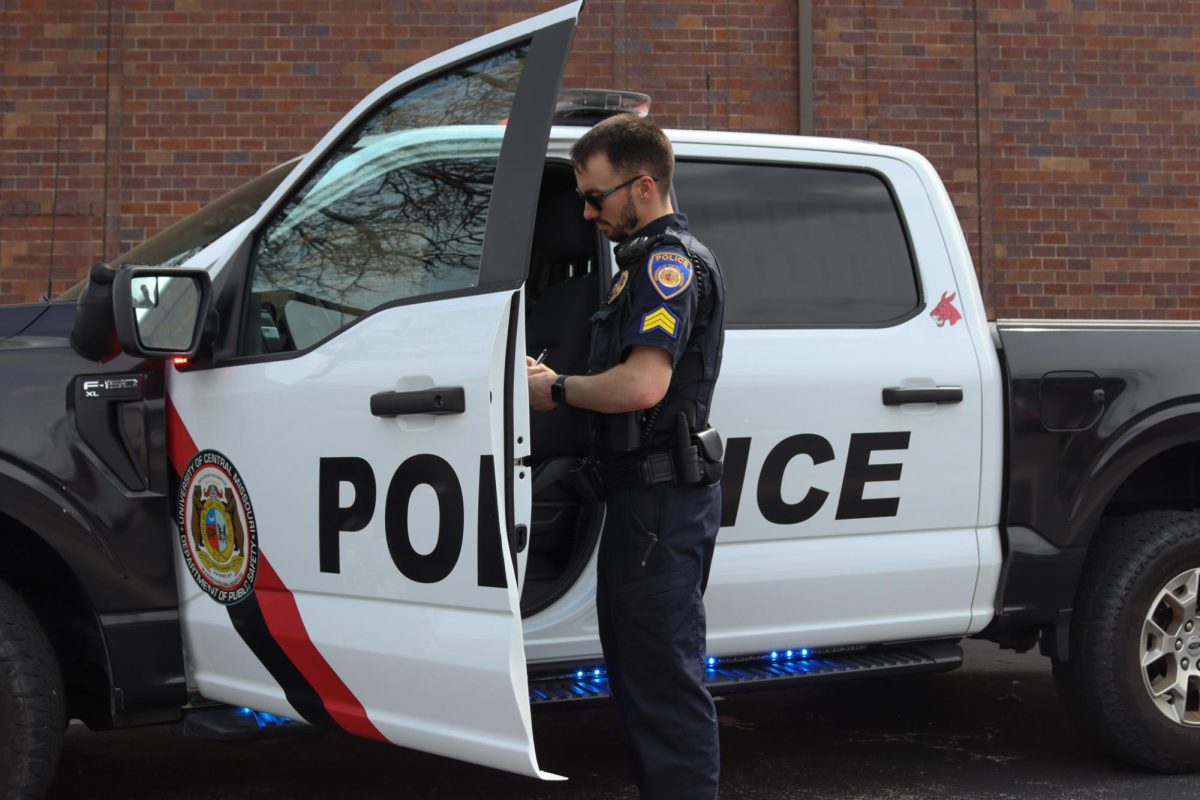
On March 25, the Muleskinner Online Manager Anthony Rey participated in a ride-along with Sergeant Davis Johnson of the University of Central Missouri Department of Public Safety. Johnson, a University of Central Missouri alumnus, graduated with a bachelor’s degree in criminal justice and has been with the department since 2018. The ride-along showed what being a public safety officer is like from the inside.
UCM Department of Public Safety officers say their work goes beyond traditional policing, blending campus safety with hands-on student support. From mental health referrals to everyday assistance like jump-starting cars and unlocking doors. Officers like Sergeant Davis Johnson, Dru Harwood and Abby Walker describe their role as a constant presence and first point of contact for students navigating campus life.
“I get to meet students who are probably not having a good day, whether it be mental health related or just a mistake was made, but I get to see them walk across the stage in a couple years time,” Johnson said.
Being a campus officer is similar to working as a metro officer, but there are several key differences. One of the most notable is the range of resources campus officers can provide to students. Johnson explained that DPS can refer students to the Counseling Center or the Office of Student Engagement, as well as provide mental health support, as all officers are Crisis Intervention Team trained.
“We can help someone dealing with a bad mental health day by providing local and campus resources,” said Harwood. “We can help jump-start their cars when the battery is dead. If they are locked out of their room and nobody is coming to help, we will be there.”
If a student is experiencing mental health challenges or difficulty adjusting to college life, the Department of Public Safety often serves as a first point of contact. Through the use of Maxient, the university’s online reporting system, students and faculty can submit reports that allow situations to be reviewed and addressed to help ensure student safety and well-being.
Another difference is the ability to maintain a consistent presence on campus. Compared to metro departments, which often cover larger areas, campus officers are able to regularly patrol the university grounds. This not only lowers response time in case of an emergency, but makes the campus feel more safe through visual presence.
“Working with students is the most rewarding aspect of my job. Each student comes from a different background, culture and viewpoint of the world,” Harwood said.
The roles the campus officers fill throughout the university community. Whether through patrol, assistance or student interaction, Public Safety maintains a steady presence aimed at supporting students throughout their time on campus.
“The main thing that I want students to know is that even if you are underage, it is always okay to call 911 if you think someone may have alcohol poisoning. We want to help and safety is our top priority,” said Walker.