University of Central Missouri students are facing rising costs as the price per credit hour increases by an average of $4.36 for the 2025–2026 academic year, according to information presented at the Board of Governors’ March 27, 2025 meeting. Tuition, course fees, online learning charges, and textbooks all contribute to higher expenses that are prompting many to adjust schedules, reconsider graduation plans, and seek ways to manage their budgets. UCM’s financial advisers are working with students to navigate these rising costs and develop strategies to stay on track academically and financially.
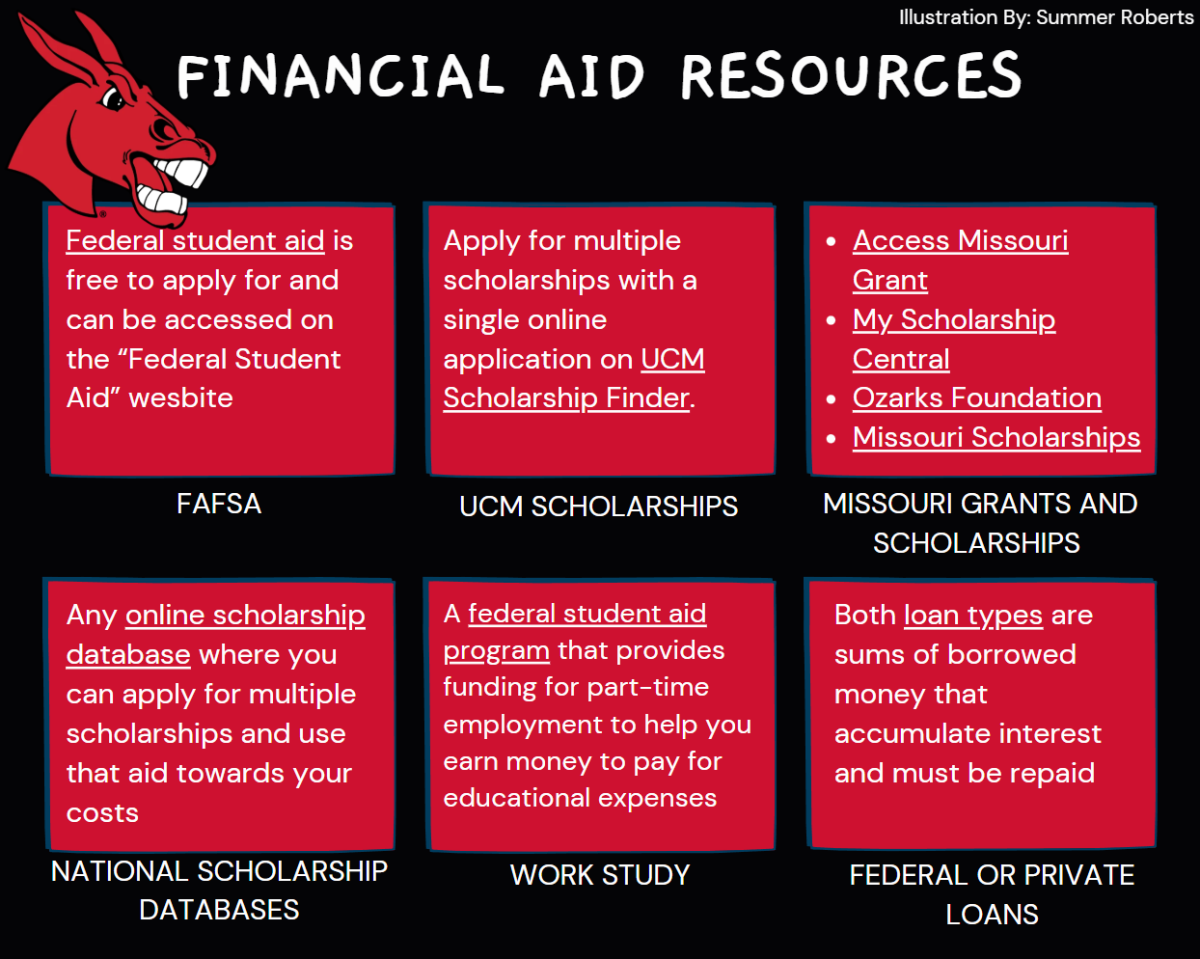
“Costs are rising, and it’s unfortunately necessary to do so. However, [students can] come talk to us; let’s build these plans now. Let’s get ahead of it before the bill gets too high or enrollment is stalled, because I am here and happy to talk,” said Madeline Schafer, a Financial Aid Counselor.
Financial advisors have also noticed the impact. Many believe students are requesting to take fewer credit hours to offset the costs. These shifts have influenced student decision-making in regard to planning degree paths and long-term choices.
“What stops most students isn’t their desire to learn and it isn’t their dreams of a prospective degree or their dream job. A lot of times it is the cost, the finances,” said Schafer.
As UCM continues to evaluate tuition and fee structures along with the budget each year, students can expect ongoing discussions about affordability, financial aid and program funding. There has been an increase in efforts to increase transparency, expand opportunities and review fees, which are all part of ongoing conversations.
“We rely on state funding, tuition and students for the UCM budget. So if one goes down, the other has to make up the difference,” said Rhonda Stangel, Director of Student Accounts and Loans.
These pressures reflect a broader trend in higher education, where rising costs are affecting colleges across the state and nationwide. Even with these increases, UCM remains significantly less expensive than comparable Missouri institutions such as the University of Missouri-Kansas City, University of Missouri and Missouri State University.
Rising class costs at UCM are driven by slower growth in state funding, economic inflation and the increasing expenses required to operate academic programs and maintain campus facilities. When state appropriations do not keep pace with rising costs, the university relies more on tuition and student fees to support its budget. UCM has also seen a recent decline in international student enrollment, a group that pays higher tuition and contributes a significant share of revenue. With fewer international students, the university faces additional financial pressure and must adjust tuition and fees or identify other funding sources.
UCM’s academic programs span many different disciplines, each with its own fees. These charges may support equipment, software, labs and instructional materials, but many students are saying this cost is becoming too much to handle. In addition to tuition increases, online learning fees and textbooks have added to this strain.
“I am already paying $500 a month out of pocket for some of my classes and textbooks,” said Harris.
As prices continue to rise, students in majors like pro-pilot are paying $60-80,000 more in additional costs for their degree. Out-of-state graduate students are paying the most at $600 on average, and in-state undergraduates are paying the least for the current credit hour rates at $297.
“The science department is higher than my roommate, who is an art major. The costs that she is putting into classes and courses are not nearly as much as what I am spending,” said Harris.
“I work at CVS as a pharmacy technician, so I make enough to cover the out-of-pocket costs… You have to have great time management, and that’s really hard to do as a college student because you’re becoming young adults, figuring out your own lifestyles outside of home, and then you have your work life and school life,” said Harris.
For more information about the annual budget, you can visit the UCM budget minutes. For information about financing your education, you can visit the UCM website.
This article was originally posted on Feb. 18, 2026, and incorrectly stated “the price per credit hour increases by an average of $102.25 for the 2025–26 academic year.” The article has been updated with the correct average increase of $4.36 between the 2025 and 2026 academic years.