With the days getting shorter and the temperature dropping, students may start to feel an unexpected sense of sadness. For some, these changes mark the return of seasonal depression, a type of mood disorder that comes and goes throughout the fall and winter months. Seasonal depression, also known as seasonal affective disorder (SAD), can cause feelings of sadness, low energy, changes in sleep, decreased appetite and difficulty concentrating.
According to the American Psychiatric Association, seasonal depression is often linked to changes in sunlight, which can affect the body’s internal clock that regulates sleep and wake cycles, as well as hormone levels such as melatonin and serotonin. Reduced sunlight exposure can disrupt these systems, leading to fatigue, low mood and difficulty concentrating. According to an APA poll, “nearly four in 10 Americans experience a decline in mood during the winter months,” with effects ranging from mild winter blues to more serious depression.
“Seasonal depression to me is like having a feeling of not being motivated,” sophomore Katie Hartwig said. “Really just wanting to sit and feeling guilty that I could be working, but my brain doesn’t feel normal.”
Hartwig’s experience is a common one, according to Thomas Augustin, Assistant Professor of Psychology. He said seasonal depression often mirrors the symptoms of major depressive disorder, including sadness, fatigue and loss of motivation, but occurs only during certain times of the year.
“The main difference is that instead of happening all year long, it happens within this seasonal period, usually in the fall and winter, and it tends to go away in the spring or summer months,” Augustin said.
Augustin explained that factors like stress, academic pressure and social isolation can make symptoms worse. Research from the American Family Physician shows that seasonal depression is most common between the ages of 18 and 30. While the condition can feel overwhelming, Augustin said small lifestyle adjustments can make a difference.
“Try to get some sunlight, even though that’s hard this time of year,” Augustin said. “Some people find vitamin D supplements to help, but always talk to your doctor first. Eating healthy and getting some exercise can really make a difference. Getting out of bed and going for even a short walk can do wonders.”
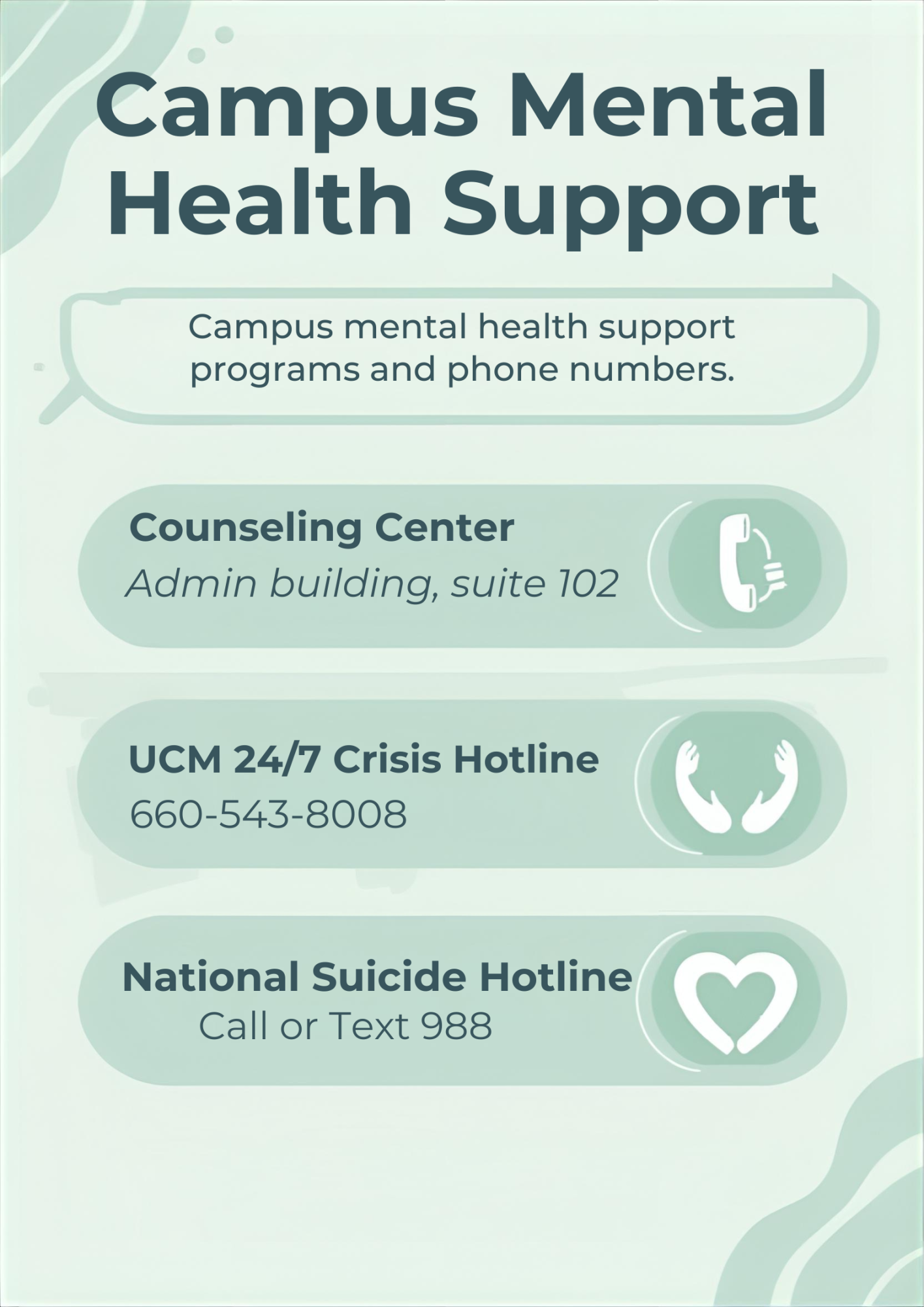
For students who need professional support, the University Health Center offers appointments with two psychiatric mental health nurse practitioners who help treat conditions such as depression and anxiety.
“One is virtual on Thursdays, and the other is in-house, usually on Tuesdays,” said Crissy Hall, director of the University Health Center.
The UCM Counseling Center also provides free and confidential services to students, including same-day crisis appointments and a 24/7 Crisis and Counseling Support Line at 660-543-8008.
If students believe they may be struggling with seasonal depression, Augustin recommends reaching out early, whether that means scheduling a counseling session, talking with a trusted friend or making small changes to improve daily routines.
“Even simple habits like getting sunlight, maintaining sleep and staying connected can make a difference,” Augustin said. “And if you need help, that’s what these campus resources are here for.”