-
A sign stating, “Hope is your greatest superpower” is displayed while cosplayers walk in the background. The sign was placed as part of the eighth annual Cos4Hope walk held at UCM on April 18.
Photo by Angi Wilhelmson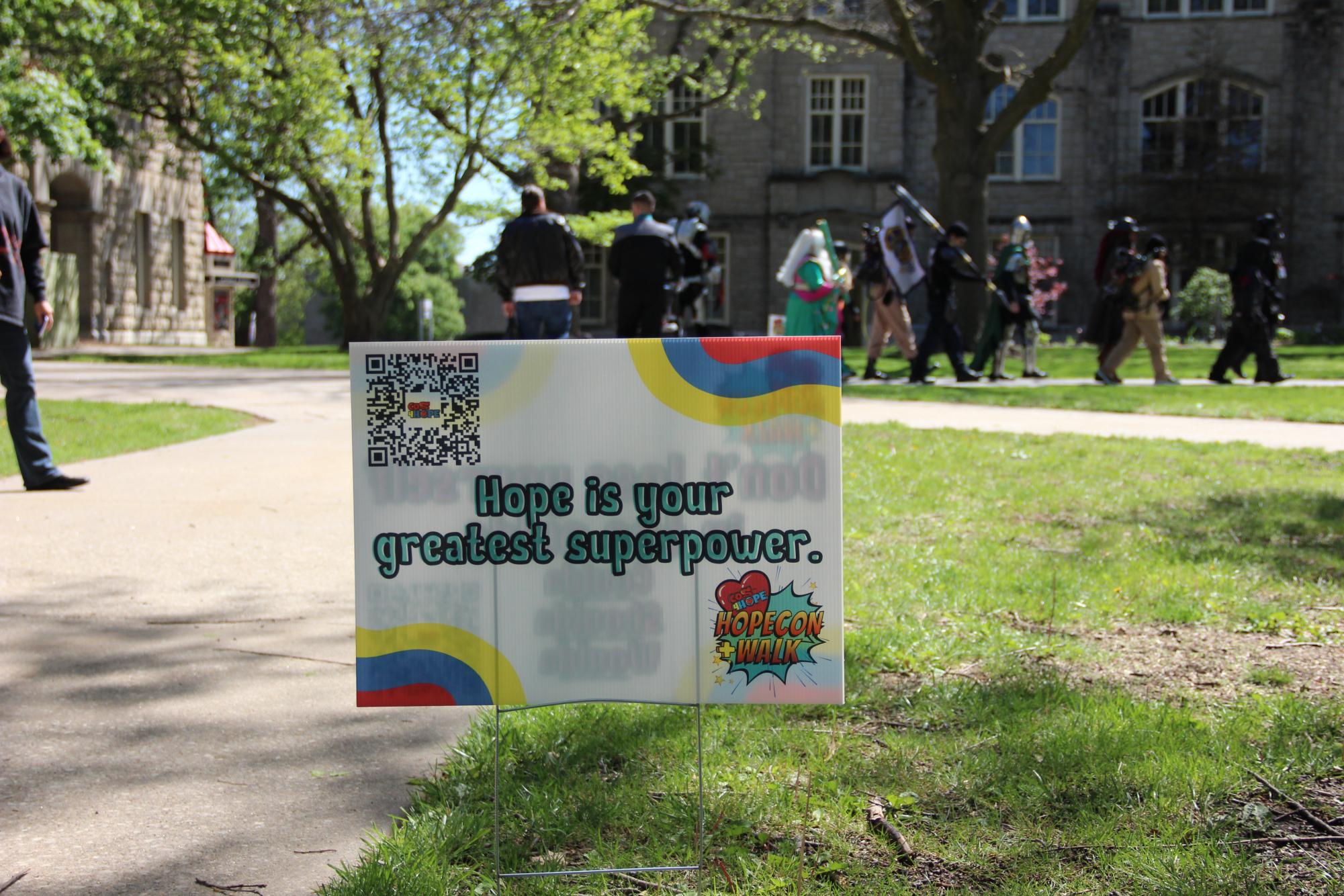
-
A group of attendees pose for a picture with a cosplayer dressed as The Flash. Cos4Hope has been holding events for the last eight years.
Photo by Angi Wilhelmson
-
Participants dressed in cosplay read the materials provided at a booth. Cos4Hope is an organization bringing awareness to mental health and suicide prevention through events like the one held on April 18 at UCM.
Photo by Angi Wilhelmson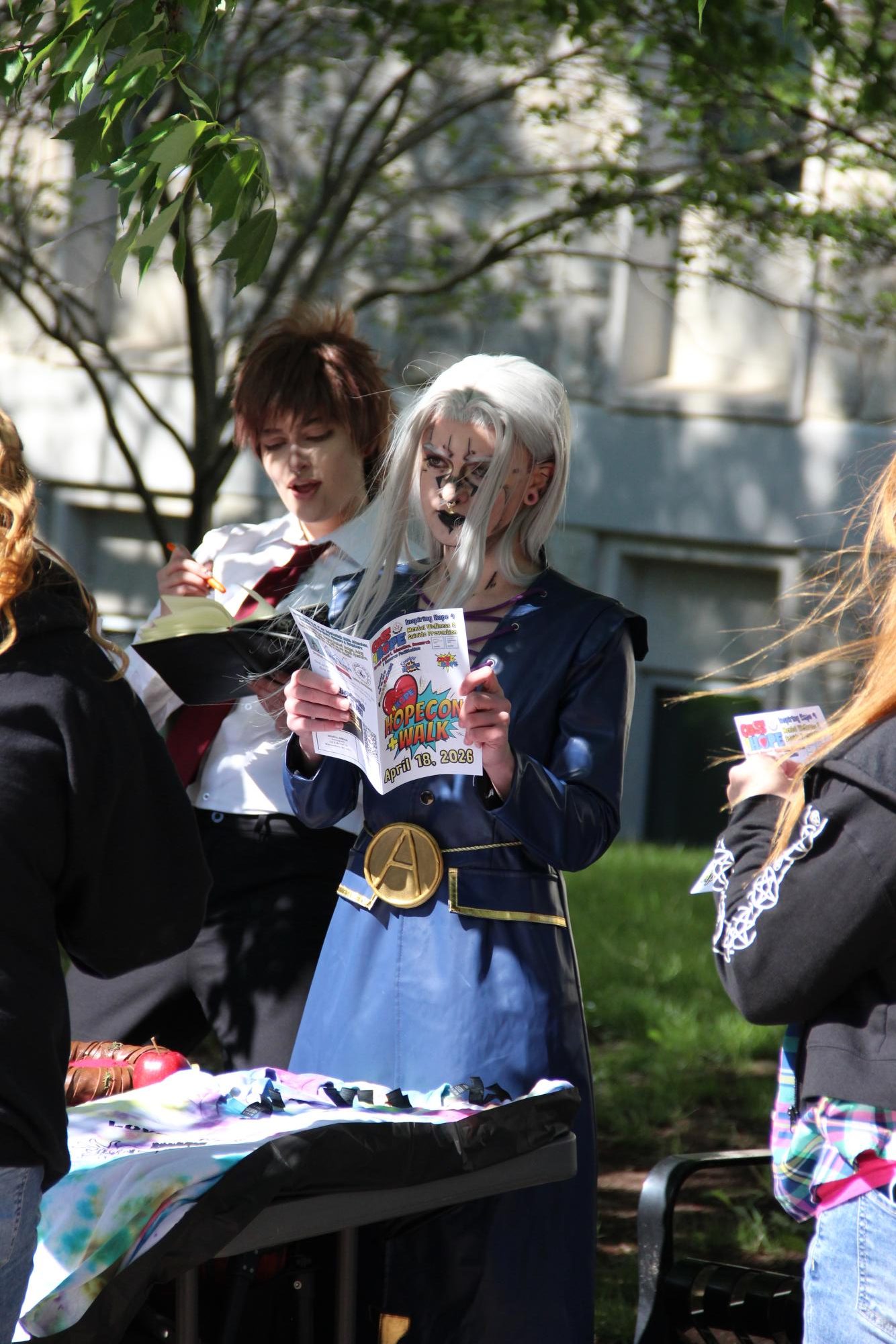
-
A group photo of all the participants at the Cos4Hope walk. Attendees are encouraged to dress up as their favorite character in order to promote mental health.
Photo by Angi Wilhelmson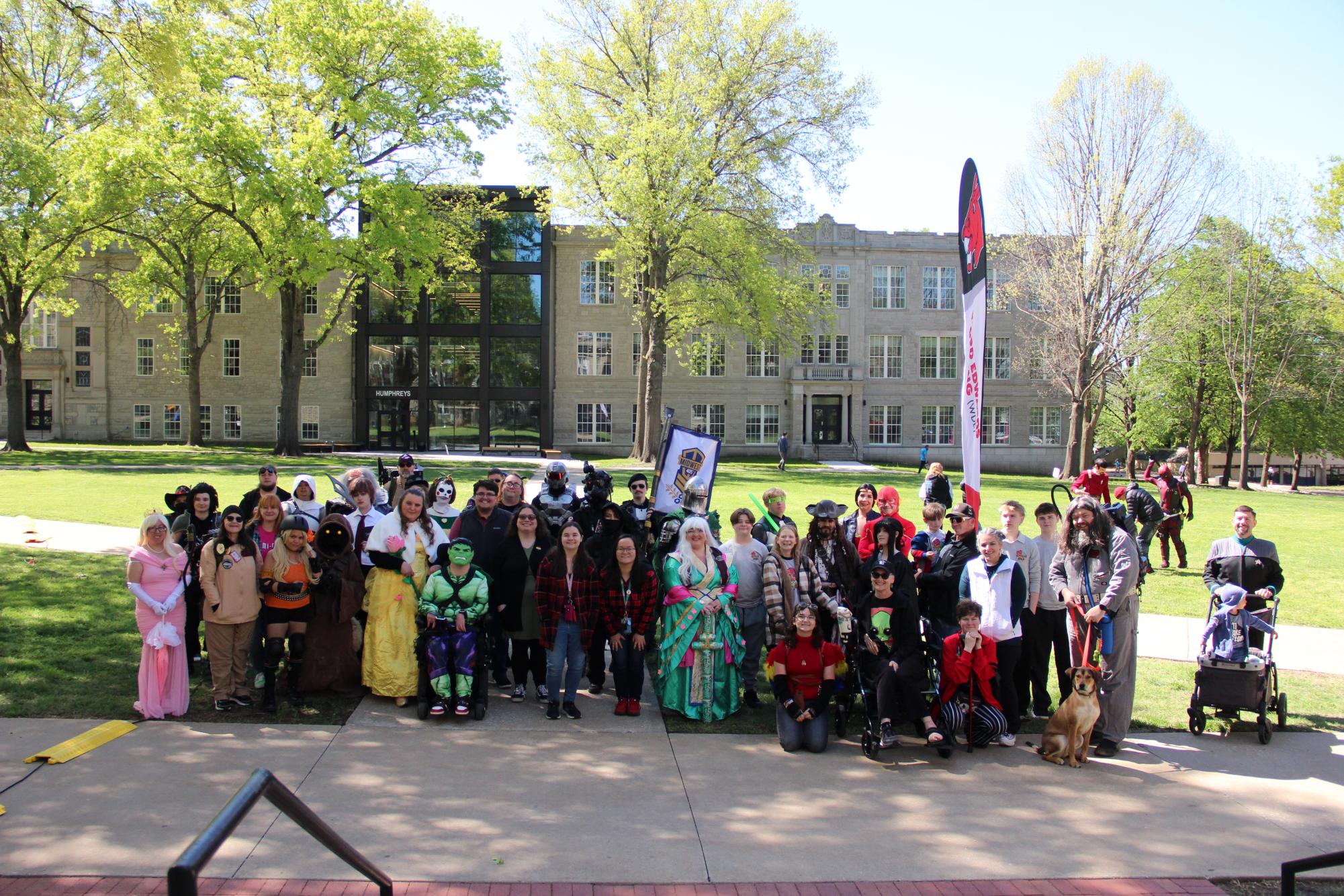
-
A cosplayer dressed as the character Deadpool walks by tables at the Cos4Hope event. The event was held at UCM on April 18.
Photo by Angi Wilhelmson
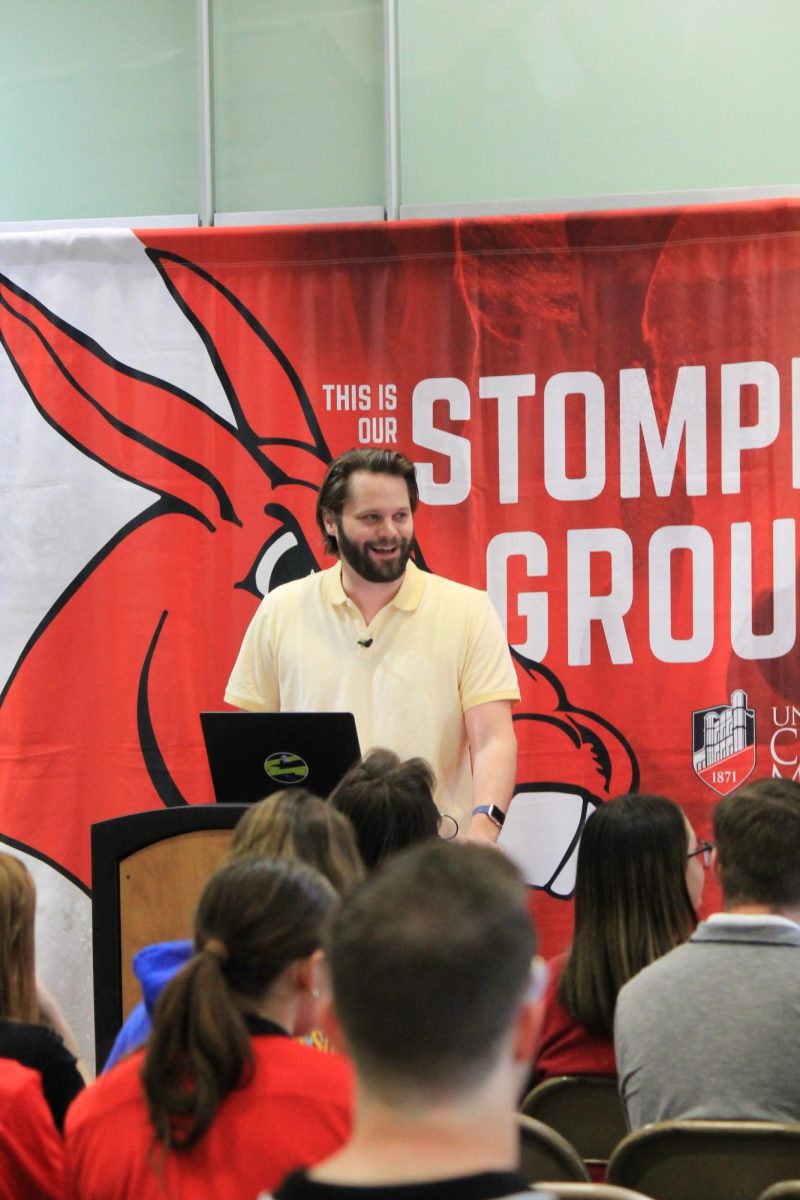
On April 18 from 9 a.m. to 3 p.m., Cos4Hope held their annual event at University of Central Missouri with many coming out to show support. The event featured mental health awareness booths, vendors, cosplay competitions and speeches made by cosplayers and the host of the event.
“It’s about being near your people and to be able to express yourself freely,” attendee Soren Johnson said.
Cos4Hope is a nonprofit organization that aims to raise awareness about mental health and suicide prevention through fandom. It was founded in 2018 by April Roller-Morris with the help of her best friend Erica Williams. After the loss of her first husband, Roller-Morris found herself navigating grief while raising three young children. At the time, she admits she knew very little about mental health.
“I dove head first into learning,” Roller-Morris said. “Not just for me, but for my boys.”
Through research, she discovered that children who lose a parent to suicide are three times more likely to be at risk themselves. She searched for ways to make mental health conversations easier for people who may not know how to talk to someone struggling. That’s where cosplay and pop culture came in.
“I had to learn what I can do to help my boys understand mental health and I started thinking about what ways can we make this education make sense,” said Roller-Morris.
Using familiar characters from well-known media, Roller-Morris began explaining complex emotions in ways her children understood. A superhero learning to control powers became a metaphor for managing emotions. According to Roller-Morris, research has since supported ideas such as “enclothed cognition” which suggests what people wear and the personas they adapt can influence their mindset. In cosplay, this often translates as confidence, expression and emotional release.
“It’s not just being in cosplay but taking on the persona of whoever you’re dressing up as,” said Roller-Morris. “The main thing we found out is that cosplay is really a coping mechanism.”
In 2013, Roller-Morris started the hashtag “Cosplay for a Cause” which quickly grew. More participants joined and many shared their own experiences with loss and mental health struggles. Behind the costumes were real people with real struggles. Over time, the movement evolved into the organization Cos4Hope.
“We noticed the interactions were incredible,” said Roller-Morris. “People opened up more. There was this sense of ‘I’m not alone.’”
For Rene Barr, longtime artist and vendor at these events, it’s more than just showcasing work.
“I really believe in the cause, but mostly I like giving back to communities such as the anime and gaming community,” said Barr.
Roller-Morris believes there is still stigma regarding mental health and suicide prevention but the cosplay community is making massive progress, especially in the convention space.
“That hope does exist and the talks that I give at every presentation, I always ask people if they’ve got a tiny little sliver of hope and to hold on for five more minutes, because in five minutes everything can change,” said Roller-Morris.